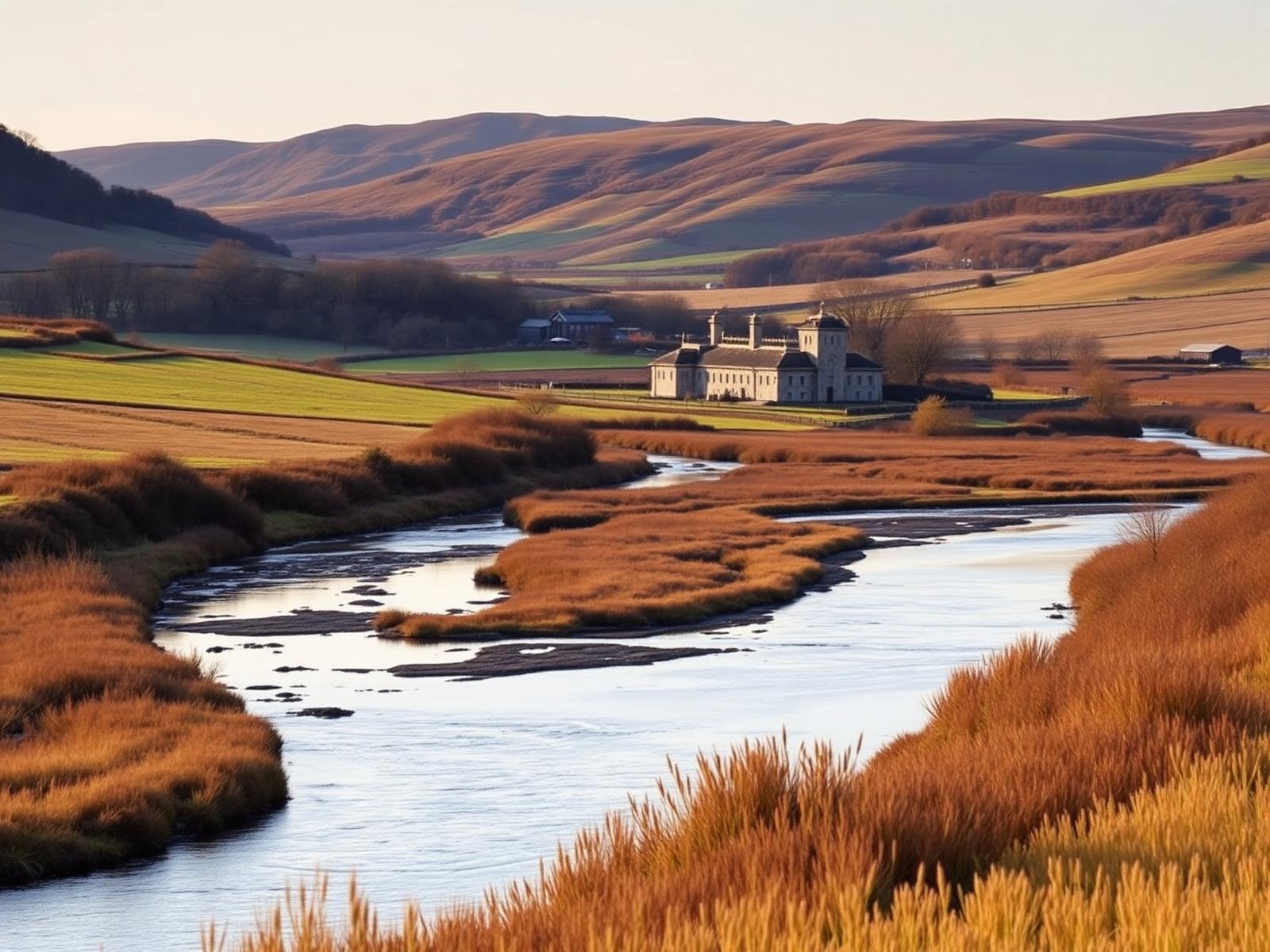
Around half of Scotland's working distilleries stand within the catchment of a single river. The Spey rises in the Monadhliath mountains and runs some hundred and seventy kilometres to the Moray Firth, and the valley it cuts contains a concentration of distilling found nowhere else in the world.
Barley, water and shelter
The reasons begin with agriculture. The lower Spey valley and the Laich of Moray beyond it are among the most productive barley-growing areas in Scotland, sheltered from the worst Atlantic weather by the mountains to the west and enjoying comparatively low rainfall.
Water was equally decisive — not the Spey itself, which is generally too large and too variable, but the numerous burns and springs feeding it from the surrounding hills. Distilleries were sited on these tributaries, and their names record the fact: Glenlivet, Glenfiddich, Glenrothes, each naming the small glen that supplied it.
Smuggling and legalisation
Before 1823 the Glenlivet district in particular was notorious for illicit distilling, with contemporary estimates of two hundred working stills in a single parish. The terrain offered concealment and the community offered silence.
George Smith took the first licence under the new Act in 1824, an act of considerable personal risk; he is recorded as carrying pistols for years afterwards. Others followed, and within a generation the region's illicit economy had been converted into a legal industry.
The railway did more for Speyside distilling than any single distiller. Before 1863 the region was remote; after it, it was industrial.
The Strathspey Railway
The transformation was completed by rail. The Strathspey Railway opened through the valley in 1863, and the effect was immediate and structural. Barley and coal could be brought in cheaply; filled casks could reach Glasgow, Edinburgh and the export docks within a day.
The distilleries built after 1863 were sited with reference to the line rather than solely to water, and several operated private sidings. Dufftown, a small town of a few thousand people, came to host multiple working distilleries within walking distance of one another.
Boom, crash and continuity
The 1890s brought a construction boom driven by demand from blenders, with more than twenty distilleries built in the region in a single decade. The collapse of the Pattison blending firm in 1898 ended it abruptly, and many of those distilleries fell silent within a few years.
Recovery took most of the twentieth century, interrupted by two wars and by the consolidations of the 1960s and 1980s. What persisted was the concentration itself: a landscape of Victorian industrial architecture, pagoda-roofed kilns and warehouse ranges that constitutes one of Britain's most complete surviving industrial regions.