Whisky production has passed through four distinct phases in five centuries: monastic, agricultural, industrial and consolidated. Each transition was driven by legislation or technology rather than by any change in what distillers wanted to make.
Farmhouse practice
The agricultural phase lasted longest. A farm still was small, operated seasonally after harvest, and served an economic function: converting perishable surplus grain into a stable commodity that could be stored, traded or used to pay rent. Malting was done on the farm floor, fermentation relied on whatever yeast was available, and the spirit was consumed young and unaged.
Quality in any modern sense was not the objective. The record of the period describes a rough product, and the refinements now regarded as essential — long fermentation, careful cutting, extended cask maturation — were developed later, mostly for commercial reasons.
The Excise Act and industrialisation
The Excise Act of 1823 converted a dispersed rural activity into a regulated industry. Legal operation required capital, permanent buildings and bonded warehousing, which favoured larger operations and gradually eliminated the smallest. Within fifty years the farm still had effectively disappeared from Scotland.
Aeneas Coffey's continuous column still of 1831 then divided the industry in two. Column distillation produced high-strength grain spirit continuously and cheaply, in volumes no pot still could match. Ireland's leading distillers rejected it; Scotland's grain distillers adopted it, and the consequences of that divergence shaped both national industries for a century.
Blending was not a creative innovation but a logistical one — a response to the problem of selling a variable product to a distant and growing market.
Blending and scale
The Spirits Act of 1860 permitted the blending of malt and grain under bond, and merchants immediately took advantage. A blend could be made consistent batch after batch, could be produced in enormous quantity and could be branded. Within forty years, blended Scotch was a global commodity and single malt was almost entirely a component of it.
The Royal Commission of 1908 settled a long legal dispute by confirming that grain spirit was legitimately whisky, and the definition of Scotch has rested on that foundation since.
Consolidation and its reversal
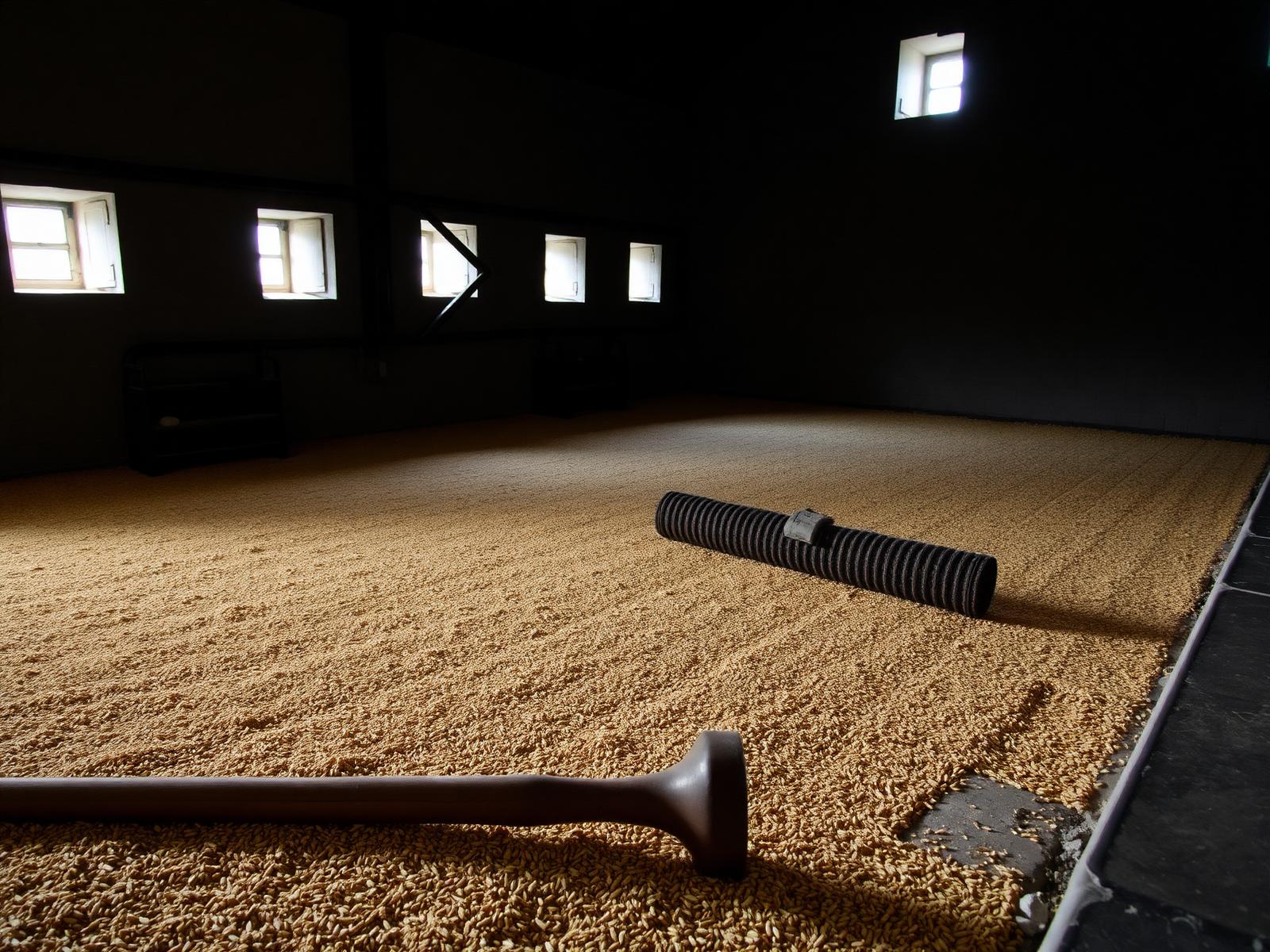
The twentieth century brought mechanisation and corporate concentration. Floor maltings closed in favour of centralised commercial maltings; direct-fired stills gave way to steam coils; wooden washbacks were replaced with stainless steel; computer control replaced manual cut points. Staff numbers at a typical distillery fell by an order of magnitude.
From the 1990s the direction partially reversed. New small distilleries opened across Scotland, Ireland, Japan, Australia and elsewhere, several deliberately adopting pre-industrial methods. Production has not returned to the farmhouse, but the historical sequence is no longer strictly one-directional.