Production Process
Six stages, each with its own documented technical history. The account below is descriptive and historical; no sensory claims are made.
Malting
Malting converts stored starch in barley into fermentable sugars. Grain is steeped in water, allowed to germinate, and then dried to arrest growth at a controlled point.
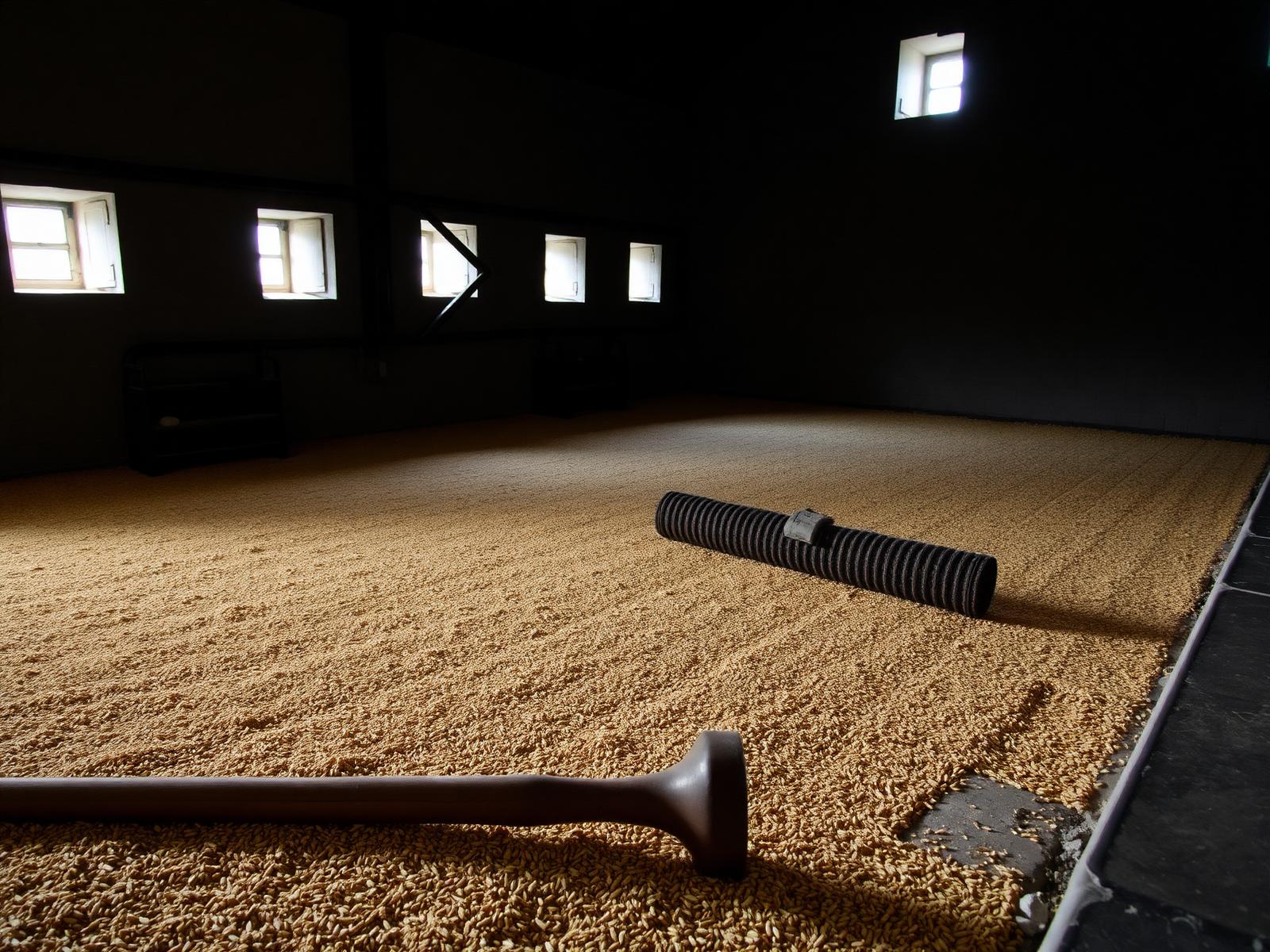
Floor malting — spreading germinating grain across a stone floor and turning it by hand with wooden shiels — was universal in Scotland and Ireland until the twentieth century. It was labour-intensive and dependent on the skill of the maltman in judging temperature and moisture by hand.
From the 1960s onwards most distilleries transferred malting to centralised commercial maltings using drum and Saladin box systems, which offered greater consistency and volume. A small number of sites retained floor maltings, and these are now documented as heritage operations.
Where peat is used, it is burned during the kilning stage; the phenolic compounds carried in the smoke adhere to the grain. Peat was historically the only fuel available on islands such as Islay, which is why the practice persisted there long after mainland producers adopted coal.
Mashing
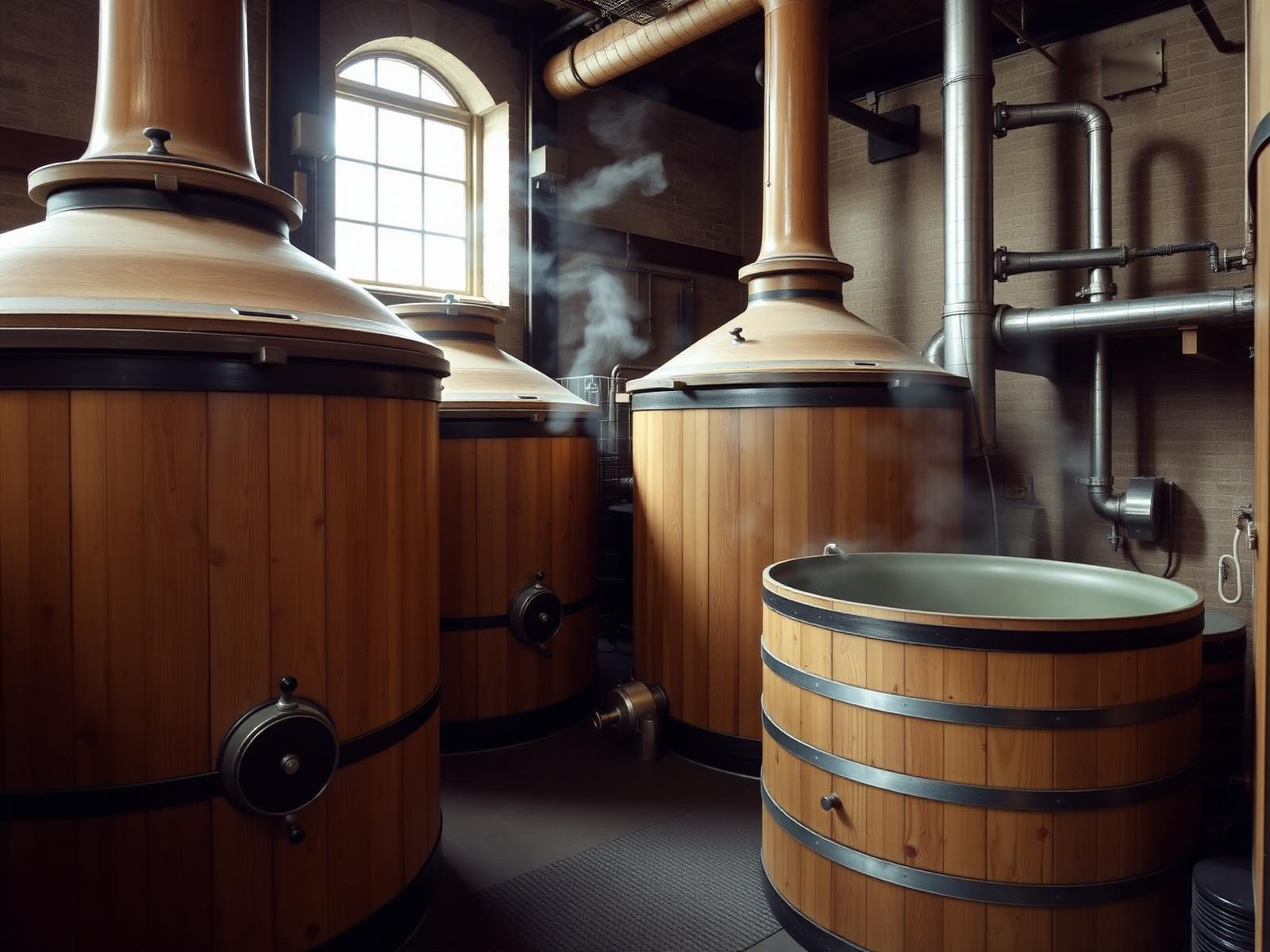
Mashing extracts the sugars developed during malting. The dried malt is milled into grist and mixed with hot water in a mash tun, typically in three successive waters at increasing temperatures.
Early mash tuns were open wooden vessels stirred by hand or by simple mechanical rakes. Cast iron and later stainless steel construction, together with the semi-lauter tun, improved extraction efficiency and reduced the physical labour involved.
The resulting sugary liquid, known as wort, is drawn off and cooled. The residual solids, or draff, have historically been sold as cattle feed — an agricultural relationship that tied distilleries closely to their surrounding farmland.
Fermentation
Yeast is added to the cooled wort in vessels known as washbacks, converting sugars into alcohol and producing a liquid of roughly eight per cent strength called wash.
Before the isolation and commercial production of brewing yeasts in the nineteenth century, distillers relied on yeast obtained from local breweries or from previous fermentations. Louis Pasteur's work on fermentation in the 1850s and 1860s provided the scientific basis for controlling the process.
Washbacks were traditionally built of Oregon pine or larch. Many distilleries have replaced them with stainless steel for hygiene and durability, while others retain wood on the grounds that the resident bacterial activity in timber contributes to the character of the wash.
Fermentation length varies considerably between distilleries, from around 48 hours to more than 100, and is recognised as one of the most significant technical variables in the entire production sequence.
Distillation
Distillation separates alcohol from water by exploiting their different boiling points. The technique reached Europe through medieval Arabic scholarship, and the earliest European descriptions relate to medicinal and alchemical work rather than beverage production.
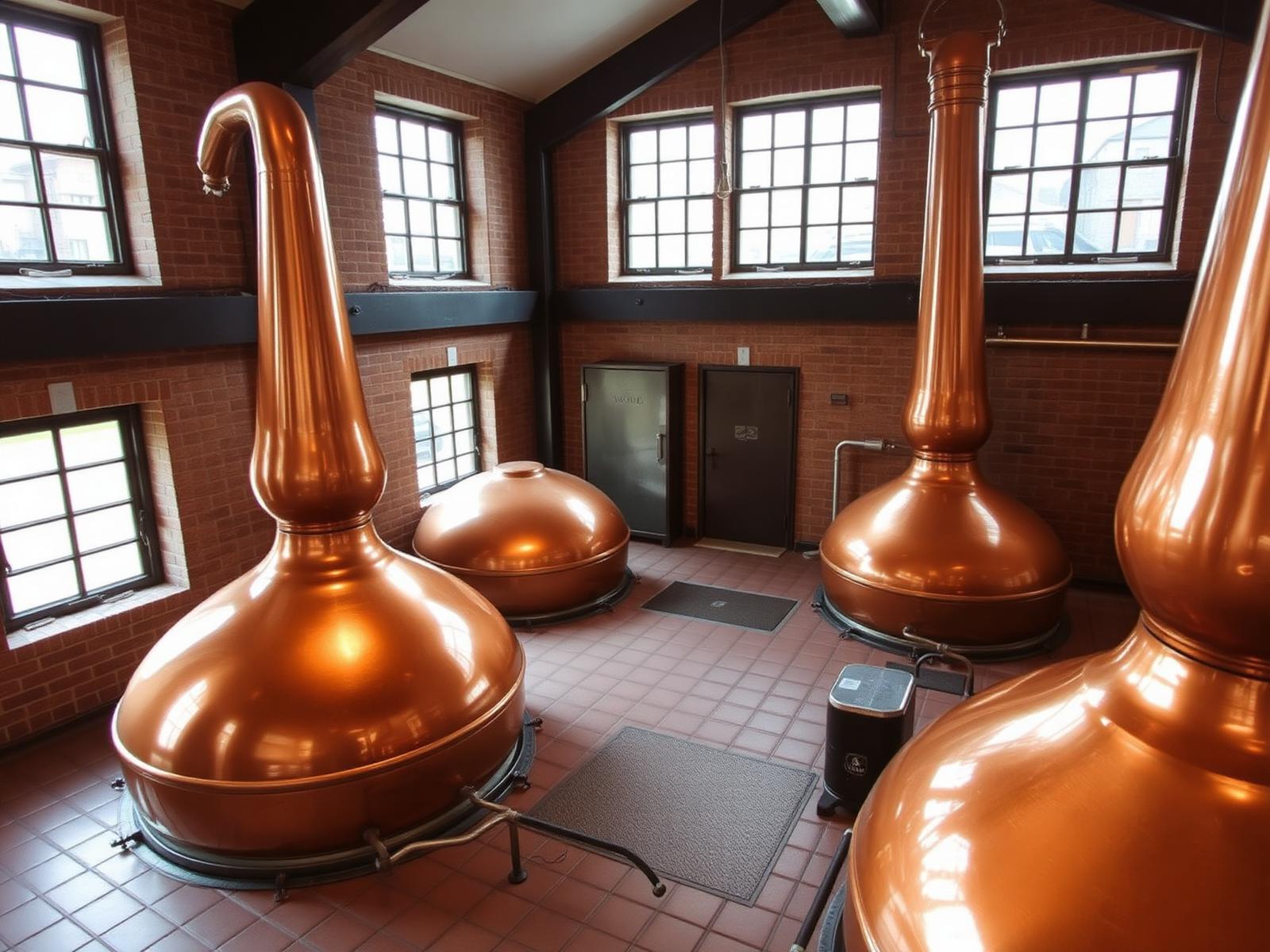
Scottish and Irish practice settled on the copper pot still. Copper was chosen initially for its workability and thermal conductivity, but it also removes sulphur compounds from the vapour — a chemical function understood empirically long before it was explained.
Still shape, neck height, lyne arm angle and the rate of heating all influence how much of the heavier vapour returns to the pot rather than reaching the condenser. Distilleries replicate the dimensions of their stills precisely when replacing them, including accumulated dents.
Aeneas Coffey's continuous column still, patented in 1831, allowed uninterrupted distillation at industrial volume and created the grain whisky sector on which nineteenth-century blending depended.
Maturation
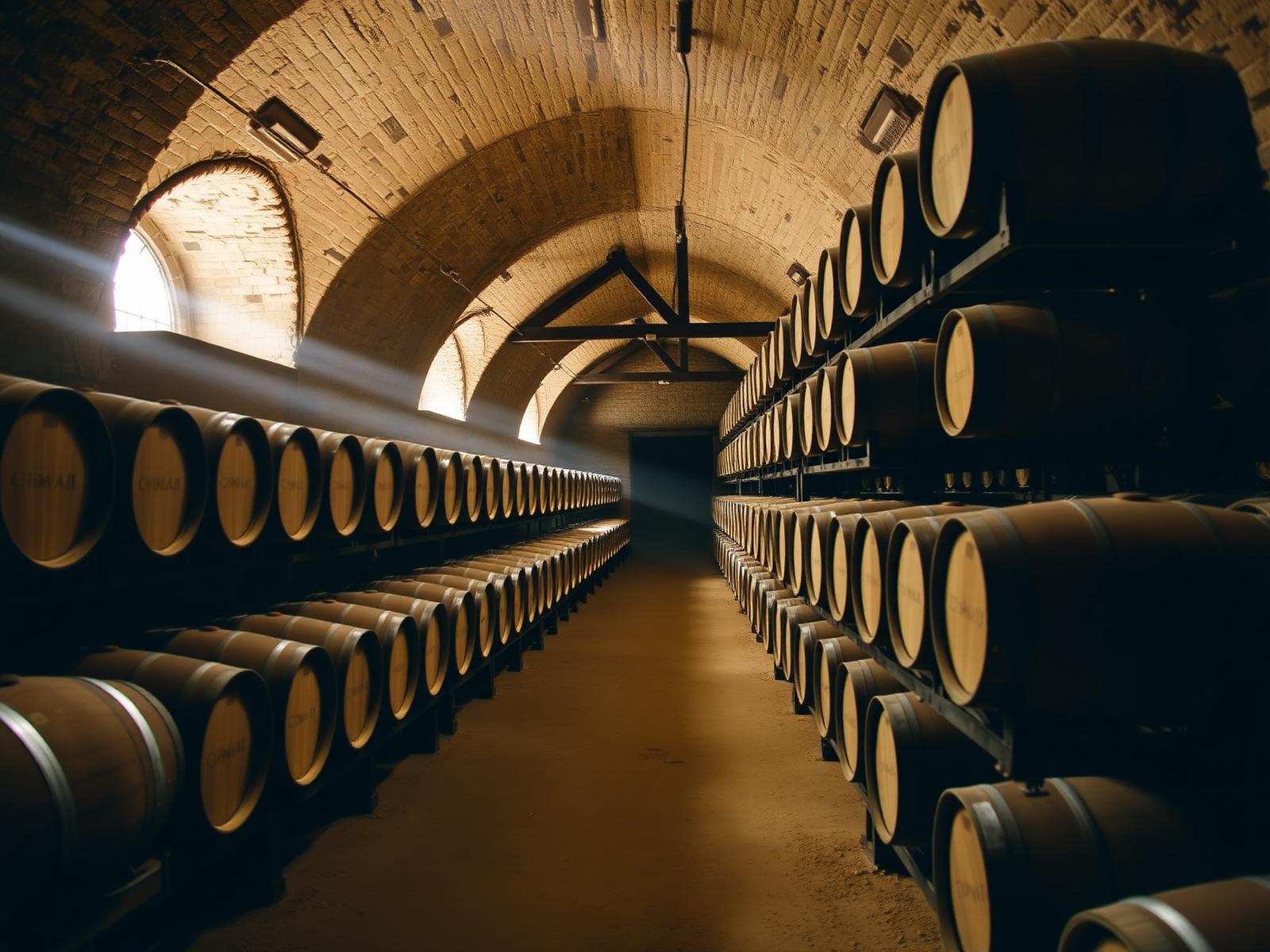
Maturation in oak was not designed; it was discovered. Casks were simply the standard shipping container of the pre-industrial world, and distillers observed that spirit held in wood for extended periods changed markedly in colour and composition.
Legal minimum maturation periods followed much later. Scotland introduced a three-year minimum through the Immature Spirits Act of 1915, and comparable requirements now exist in Ireland, Canada and Japan.
Interaction between spirit and wood involves extraction of compounds from the oak, subtractive removal of undesirable elements by the charred layer, and slow oxidation through the porous timber. Evaporation losses — traditionally called the angel's share — run at roughly two per cent per year in Scotland.
American oak and European oak carry different chemical profiles, and the widespread use of once-filled American barrels in Scotland is a direct consequence of United States regulations requiring new oak for bourbon.
Bottling
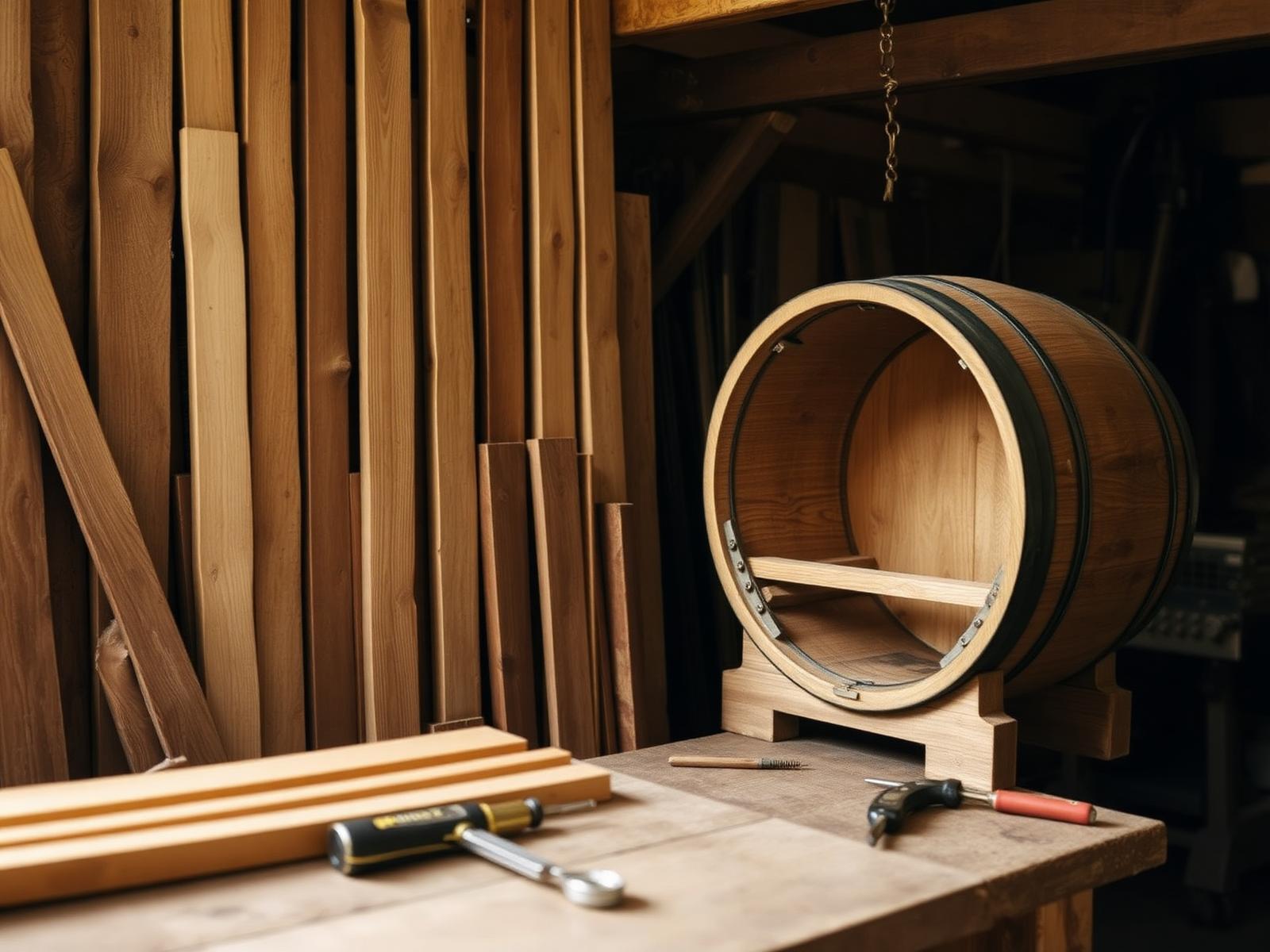
Until the late nineteenth century most spirit left distilleries in cask and was bottled, or sold by measure, by merchants and grocers. Glass was expensive and bottling was not standardised.
The development of mechanised glass production and the growth of branded blending changed this. Consistency became a commercial requirement, and distillers and blenders took control of the final stage in order to guarantee it.
Modern bottling involves the combination of casks to achieve a consistent result, reduction to bottling strength with water, and in many cases chill filtration to prevent haze at low temperatures. Some producers omit filtration and bottle at cask strength, a practice documented as a return to earlier merchant conventions.