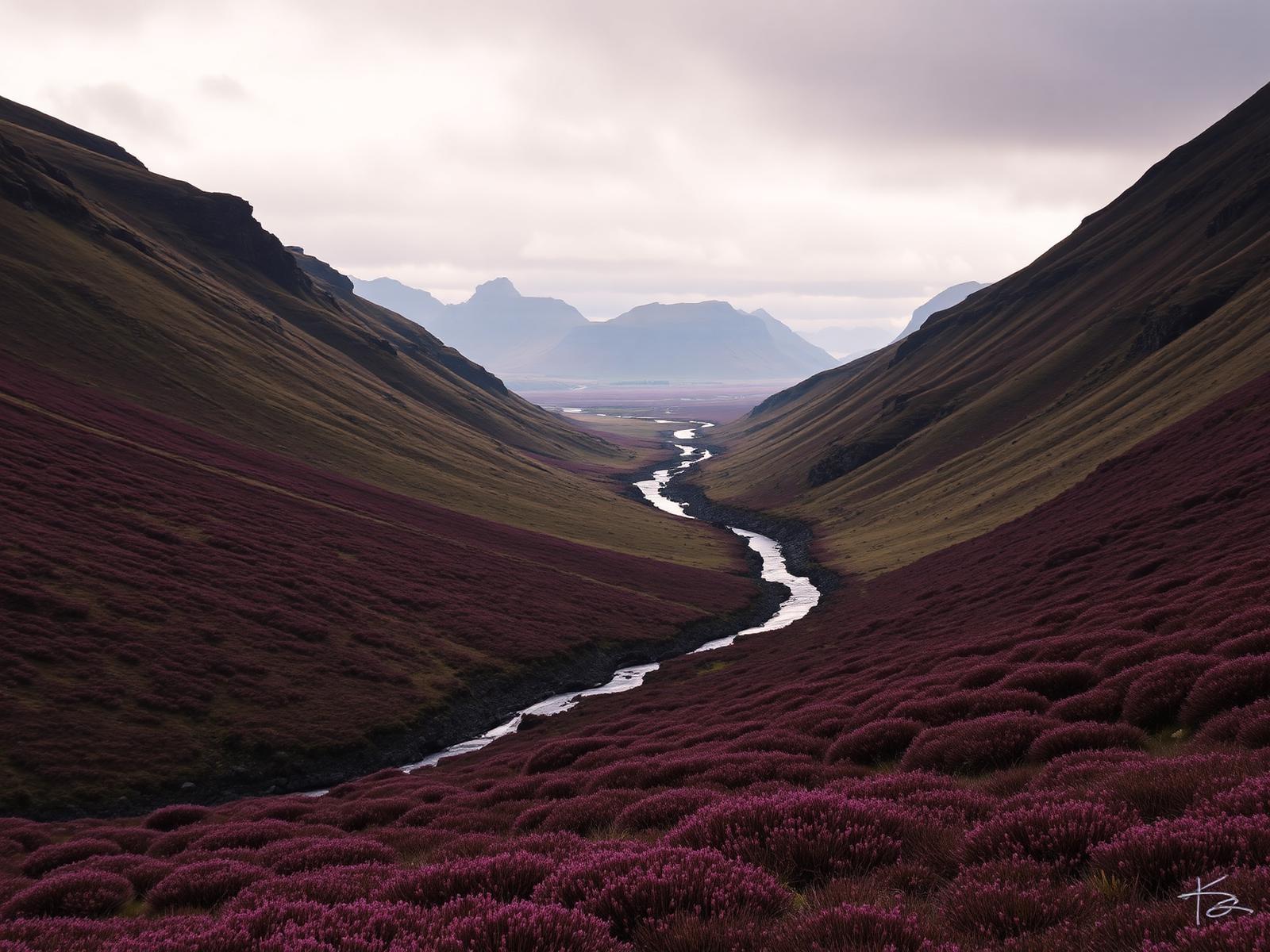
Islay is roughly forty kilometres long and lies off Scotland's west coast, closer to Ireland than to Glasgow. It has a permanent population of around three thousand and a distilling tradition entirely out of proportion to its size. The reasons are geological, agricultural and, for a long period, criminal.
Peat as necessity
Much of the island is covered in peat bog, formed over some ten thousand years from compressed vegetation. On a treeless island with no coal, peat was the only fuel available, and it was used for everything — heating houses, cooking food and drying malted barley.
When peat smoke passes through germinated barley in a kiln, phenolic compounds adhere to the grain and survive mashing, fermentation and distillation into the finished spirit. Mainland distilleries abandoned peat as coal and later oil became available by rail. On Islay the alternative arrived far later, and by then the character was the tradition.
Islay's defining production characteristic began as an accident of fuel supply on a treeless island.
The illicit century
Before legal registration, distilling on Islay was widespread and unlicensed. The island's distance from customs authority, its numerous sheltered bays and its close community relationships made enforcement nearly impossible. Excise officers were stationed on the island but operated with limited effect.
Most of Islay's registered distilleries were established between 1810 and 1830, and in almost every case the registration formalised an operation that already existed. Bowmore is recorded from 1779, Ardbeg from 1815, Lagavulin from 1816 and Laphroaig from 1815. The clustering of these dates around the Excise Act of 1823 is not coincidental.
Shore siting
Nearly every Islay distillery sits directly on the water. This was pure logistics: before the island had adequate roads, everything arrived and departed by sea. Barley and empty casks came in by puffer, filled casks went out the same way, and the distillery names were painted on seaward-facing walls so that they could be read from approaching vessels.
The siting had a secondary consequence for maturation. Warehouses standing metres from the Atlantic experience constant humidity and salt-laden air, conditions frequently cited in technical discussion of the island's maturation character, though the mechanism remains a subject of legitimate debate.
Islay's distilleries closed and reopened repeatedly through the twentieth century, several standing silent for years at a time. That they survived at all owes much to their role in the island economy, and the industrial buildings of the shoreline are now recognised as heritage structures of national significance.