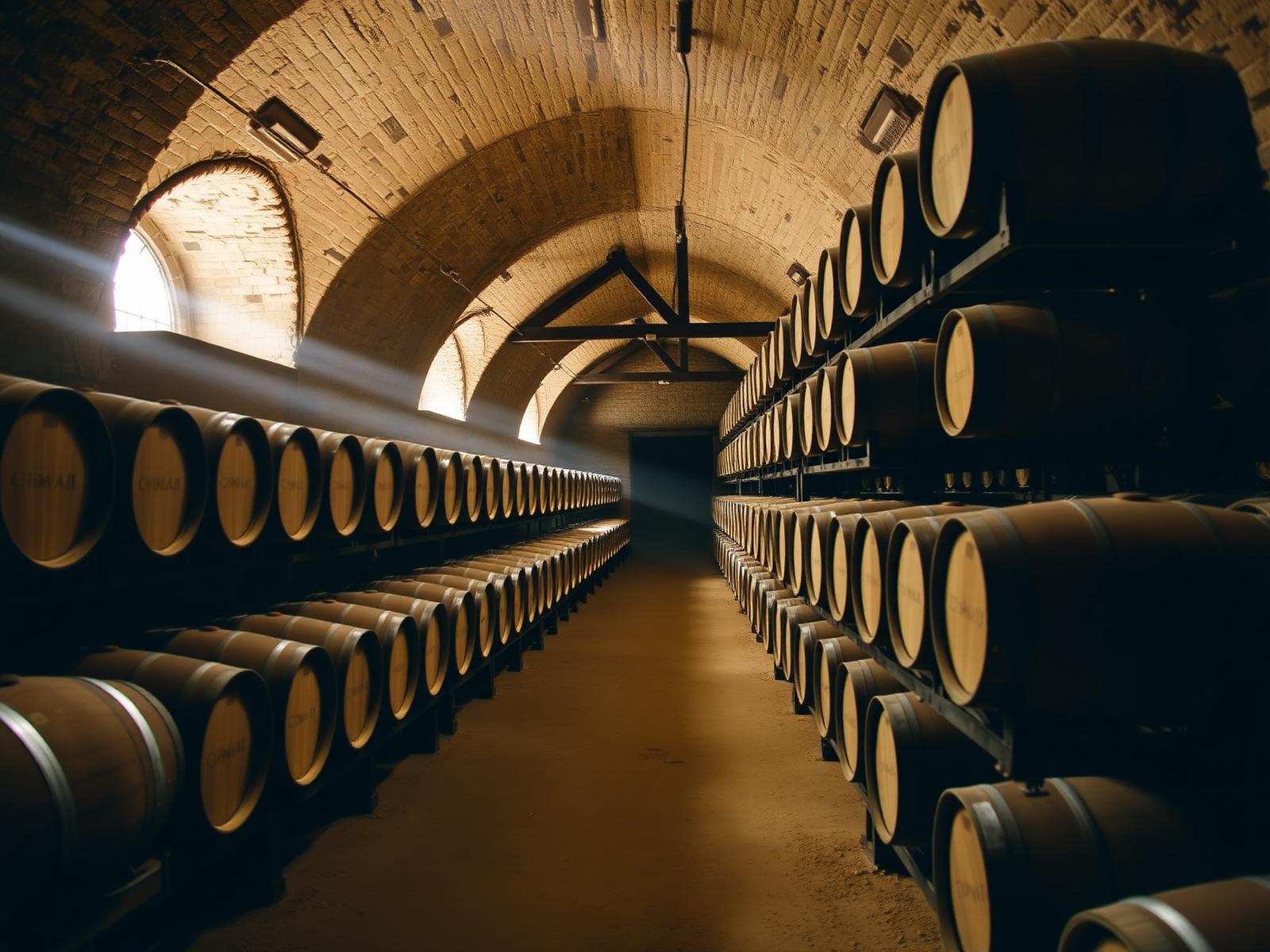
Maturation was not invented. For most of European history the barrel was simply the standard container for moving liquid, and spirit was placed in wood because there was nothing else to put it in. That it improved in the process was an observation, not a design goal.
Documentary evidence for deliberate ageing accumulates through the eighteenth and nineteenth centuries, as merchants noticed that spirit held longest in cask — often that which had travelled furthest or sold slowest — commanded higher prices. The legal minimum came much later: Britain's Immature Spirits Act of 1915 required three years, a requirement now mirrored in Ireland, Canada and Japan.
Three simultaneous processes
Modern analysis identifies three concurrent mechanisms. The first is additive: the spirit extracts compounds from the wood, including vanillin, lactones and tannins, which the toasting or charring of the cask interior has already partially transformed.
The second is subtractive. The charred layer on the cask's inner surface functions as activated carbon, removing sulphur compounds and other unwanted elements from the spirit over time.
The third is interactive. Oak is porous, and slow oxidation through the staves alters the spirit's composition in ways that cannot be replicated by any accelerated process. This is the component that genuinely requires time, and it is why chemical shortcuts to maturation have consistently failed.
Roughly two per cent of the contents of every cask evaporates each year. Over eighteen years, a third of the original volume is simply gone.
The angel's share
That evaporative loss, known traditionally as the angel's share, varies with climate. In Scotland's cool, humid warehouses it runs at around two per cent annually, with water and alcohol lost at broadly similar rates. In Kentucky's temperature extremes the loss is far greater. In tropical conditions it can exceed ten per cent, which is why long maturations are impractical in equatorial climates.
Two oaks, two traditions
American white oak, Quercus alba, is tight-grained and comparatively high in lactones. European oak, principally Quercus robur, is more porous and considerably higher in tannin. The two contribute different chemistry, and the historical availability of each shaped regional practice.
United States regulations require bourbon to be matured in new charred oak, which generates an enormous continuous supply of once-used American barrels. Those barrels became, and remain, the principal maturation vessel of the Scottish and Irish industries. Sherry casks arriving in British ports as shipping containers supplied the other major tradition, and when the bulk sherry trade declined, casks began to be seasoned specifically for the purpose.
The economics of maturation are therefore inseparable from the economics of cooperage in other countries entirely — an unusually direct example of how one nation's regulation determines another's production tradition.